
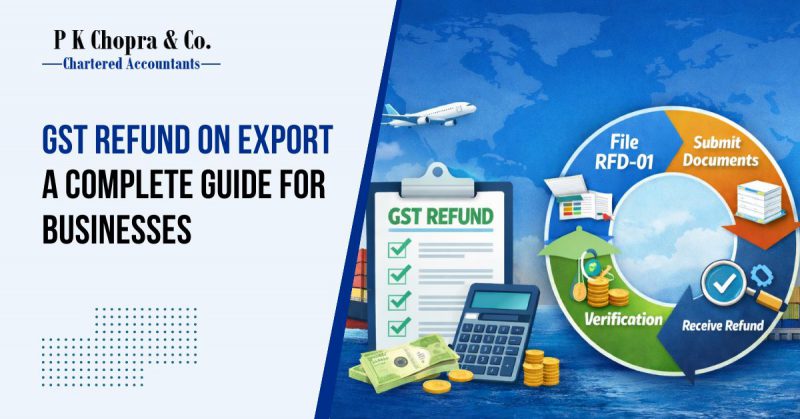
GST Refund on Export: A Complete Guide for Businesses
Exporting goods or services is a lifeline for many businesses, and understanding GST refund on export is crucial to maintain smooth cash flow. If you’ve ever wondered how exporters get back the taxes paid on exports, you’re in the right place. Let’s dive deep and make sense of this process in simple words.
What is GST Refund on Export?
A GST refund on export is a refund claimed by exporters for taxes paid on goods or services exported outside India. Since exports are considered zero-rated supplies, exporters are either allowed to supply under a Letter of Undertaking (LUT) without paying IGST or can pay IGST and claim a refund later.
In simple words, the government ensures that taxes do not become a cost for exporters and encourages international trade.
Types of Exports under GST
Physical Exports
These involve the actual shipment of goods outside India. Physical exports qualify for zero-rated supply, meaning no GST is charged to the overseas buyer.
Deemed Exports
Here, goods do not leave the country, but the supply is considered as an export under GST, e.g., supplies to certain government projects or SEZ units. Exporters of deemed exports can also claim a refund of taxes paid.
Who Can Claim GST Refund on Export?
Exporters of Goods
Any business registered under GST that exports goods physically or under deemed exports can claim a refund.
Exporters of Services
Service providers exporting services outside India can also claim GST refund, provided the payment is received in convertible foreign exchange and other conditions are met.
Conditions for Claiming GST Refund
To claim a refund, exporters must meet some basic conditions:
Filing of Returns
All GST returns should be filed correctly and on time before applying for a refund.
Payment of Taxes
Taxes should be paid in full or the supply should be made under LUT/Bond.
Proper Documentation
Correct and complete invoices, shipping bills, and bank details are necessary for smooth refund processing.
Step-by-Step Process to Claim GST Refund
Step 1: Filing the Refund Application
File Form GST RFD-01 on the GST portal to initiate the refund process.
Step 2: Submitting Necessary Documents
Attach shipping bills, tax invoices, LUT/Bond, and bank account details while filing the application.
Step 3: Verification by GST Authorities
The GST authorities verify your claim and may ask for additional documents.
Step 4: Refund Sanction
Once verified, the refund amount is sanctioned and credited to your bank account.
Documents Required for GST Refund
Shipping Bill
The shipping bill proves that goods have been exported.
Tax Invoices
Invoices showing GST paid on exported goods are mandatory.
LUT/Bond
A Letter of Undertaking (LUT) or bond is required for zero-rated supplies without IGST payment.
Bank Account Details
Refunds are credited directly to the exporter’s bank account, so accurate bank details are a must.
Refund of IGST vs Refund of Input Tax Credit
Exporters can claim:
- IGST Paid Refund – When IGST is paid on exports.
- Input Tax Credit Refund – When LUT is used, exporters can claim refund of unutilized input tax credits on inputs and input services.
Understanding the difference ensures maximum cash flow benefits.
Common Challenges in GST Refund for Exporters
Delayed Refunds
Many exporters face delays due to verification procedures or mismatched documentation.
Incorrect Documentation
Mistakes in shipping bills, invoices, or bank details can lead to rejection.
Technical Errors in Filing
GST portal errors or incorrect form submission often slow down the process.
Tips to Ensure Faster GST Refund
Maintain Proper Records
Keep all invoices, bills, and bank statements organized for quick verification.
File Returns on Time
Timely GST returns prevent unnecessary delays in refunds.
Use LUT for Zero-Rated Exports
Filing under LUT allows exporters to avoid paying IGST upfront, simplifying the refund process.
How LUT (Letter of Undertaking) Helps in Export Refunds
LUT is a guarantee to the government that goods/services will be exported, allowing exporters to supply without paying IGST. This avoids delays in refunds and improves working capital.
Time Frame for Receiving GST Refund
Typically, the GST refund is processed within 60 days from the date of application. If the refund is delayed, exporters can follow up with GST authorities.
Role of GST Portal in Export Refund
The GST portal is the central platform for filing refund claims. Exporters can track applications, submit documents, and receive refund notifications online, reducing manual paperwork.
Impact of GST Refund Delays on Business Cash Flow
Delayed refunds can strain working capital, especially for small and medium exporters. Proper planning, using LUT, and accurate filing can minimize these impacts.
Conclusion
Claiming GST refund on export is a key aspect of managing finances for exporters. Understanding the process, maintaining proper documentation, and using LUT efficiently ensures smooth and timely refunds. By following these best practices, businesses can focus on growth and international trade without worrying about tax bottlenecks.
FAQs
Q1: Can new exporters claim GST refunds immediately?
Yes, new exporters can claim refunds, but all required documents, including LUT and invoices, must be in place.
Q2: Is GST refund applicable for both goods and services?
Absolutely! Both exported goods and services are eligible under GST rules.
Q3: What if my refund gets delayed?
You can follow up on the GST portal or file a grievance with the GST authorities for delayed refunds.
Q4: Can refunds be claimed without filing LUT?
Yes, but in that case, IGST must be paid upfront and then claimed as a refund.
Q5: How long does it take to get a GST refund?
Typically, refunds are processed within 60 days, though delays can happen due to verification or documentation issues.