
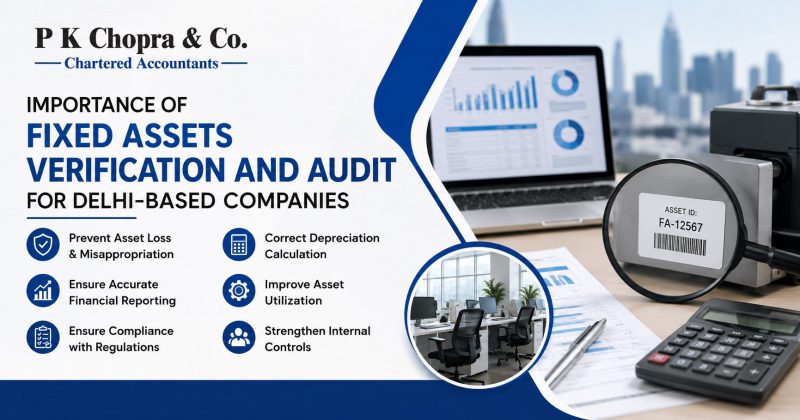
Importance of Fixed Assets Verification and Audit for Delhi-Based Companies
In today’s competitive business environment, companies invest heavily in fixed assets such as machinery, computers, office equipment, vehicles, furniture, and manufacturing plants. These assets play a critical role in daily operations and long-term business growth. However, without proper monitoring and verification, businesses may face issues such as inaccurate financial reporting, asset loss, incorrect depreciation calculations, and compliance risks.
This is why fixed assets verification and audit have become essential for businesses, especially for companies operating in Delhi where businesses often manage multiple offices, warehouses, branches, and large inventories of assets.
In this article, we discuss the importance of fixed assets verification and audit for Delhi-based companies and how regular audits can improve financial accuracy and operational efficiency.
What Is Fixed Assets Verification?
Fixed assets verification is the process of physically checking and confirming the existence, location, condition, and ownership of a company’s fixed assets and reconciling them with accounting records and fixed asset registers.
The process generally includes:
- Physical verification of assets
- Asset tagging and identification
- Reconciliation with accounting records
- Verification of ownership documents
- Review of depreciation calculations
What Is a Fixed Assets Audit?
A fixed assets audit is a detailed review of the company’s fixed asset records, internal controls, valuation methods, and compliance procedures to ensure that financial statements accurately reflect the value of the organization’s assets.
The audit helps management verify that:
- Assets recorded in books actually exist.
- All existing assets are properly recorded.
- Depreciation is calculated correctly.
- Asset disposal and additions are accurately reported.
Why Fixed Assets Verification Is Important for Delhi-Based Companies
- Prevents Asset Loss and Misappropriation
Large businesses often operate across multiple locations, making it difficult to track physical assets.
Regular verification helps identify:
- Missing assets
- Unauthorized asset movement
- Theft or misuse of company property
- Duplicate asset records
Early detection minimizes financial losses.
- Ensures Accurate Financial Reporting
Fixed assets directly affect:
- Balance Sheet
- Profit and Loss Account
- Depreciation expenses
- Tax calculations
Incorrect asset records can lead to inaccurate financial statements and compliance issues.
- Supports Correct Depreciation Calculation
Depreciation is one of the most important accounting adjustments for businesses.
Asset audits help ensure:
- Correct asset classification
- Appropriate depreciation rates
- Compliance with accounting standards
- Accurate tax computation
Errors in depreciation may lead to tax disputes and penalties.
- Improves Asset Utilization
Many companies discover during audits that some assets are:
- Idle
- Underutilized
- Obsolete
- Damaged
Identifying such assets helps businesses optimize investments and improve operational efficiency.
- Strengthens Internal Controls
Fixed assets audits help evaluate internal controls relating to:
- Asset acquisition
- Approval procedures
- Maintenance schedules
- Asset disposal process
- Transfer of assets between locations
Strong controls reduce operational risks.
- Supports Insurance Claims
In the event of:
- Fire
- Theft
- Natural disasters
- Equipment damage
Verified asset records and proper documentation simplify insurance claims and settlement processes.
- Ensures Compliance with Regulatory Requirements
Businesses must comply with:
- Companies Act, 2013
- Income Tax Act, 1961
- Accounting Standards
- GST regulations where applicable
Proper asset records support statutory and tax audits.
Common Fixed Assets for Delhi Businesses
Delhi-based companies commonly verify:
- Office furniture
- Computers and laptops
- Servers and IT infrastructure
- Machinery and equipment
- Vehicles
- Air conditioning systems
- Security systems
- Warehouse equipment
Challenges Faced During Fixed Assets Verification
Many companies face issues such as:
- Missing asset tags
- Outdated asset registers
- Improper documentation
- Incorrect asset classification
- Assets transferred without records
- Inconsistent depreciation methods
Professional audits help resolve these challenges effectively.
Best Practices for Fixed Assets Verification
To improve asset management, companies should:
- Maintain an updated fixed asset register.
- Use barcode or RFID tagging.
- Conduct annual physical verification.
- Reconcile physical assets with books regularly.
- Document all purchases and disposals.
- Establish clear asset ownership policies.
Benefits of Professional Fixed Assets Audit Services in Delhi
Professional auditors can help businesses:
- Conduct accurate physical verification.
- Reconcile discrepancies.
- Improve internal controls.
- Ensure compliance with accounting standards.
- Identify obsolete or idle assets.
- Strengthen financial reporting accuracy.
Which Businesses Should Conduct Fixed Assets Audits?
Fixed assets verification is highly recommended for:
- Manufacturing companies
- IT companies
- Retail businesses
- Healthcare organizations
- Educational institutions
- Logistics companies
- Construction firms
- Companies with multiple locations
Conclusion
Fixed assets verification and audit are essential for maintaining financial accuracy, preventing losses, and improving business efficiency. For Delhi-based companies managing large numbers of assets across multiple locations, periodic verification is no longer optional—it is a business necessity.
By conducting regular fixed asset audits, businesses can strengthen internal controls, improve compliance, and make informed investment decisions while protecting valuable company resources.
Frequently Asked Questions (FAQs)
- What is fixed assets verification?
Fixed assets verification is the process of physically checking company assets and matching them with accounting records and asset registers.
- How often should companies conduct fixed asset verification?
Most companies conduct fixed asset verification annually, although businesses with large asset bases may perform it more frequently.
- Why is fixed asset verification important?
It helps prevent asset loss, improves financial accuracy, ensures proper depreciation, and supports compliance requirements.
- What documents are required for a fixed assets audit?
Typical documents include:
- Fixed asset register
- Purchase invoices
- Asset transfer records
- Disposal documents
- Insurance records
- Can fixed asset audits help reduce business risks?
Yes. Regular audits help identify missing assets, weak controls, and operational inefficiencies before they become major issues.