
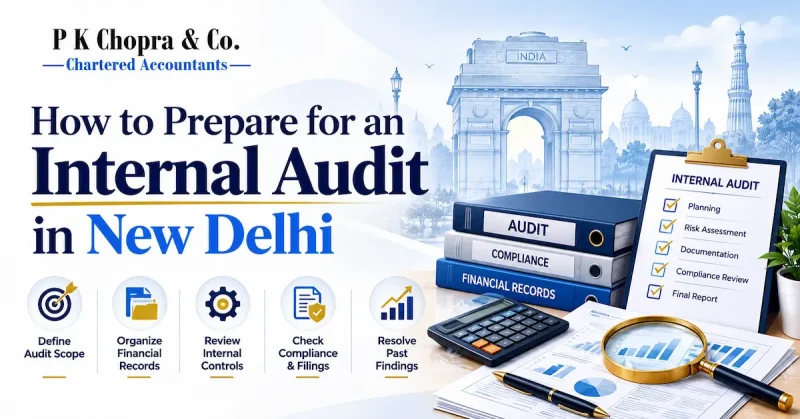
How to Prepare for an Internal Audit in New Delhi
An internal audit helps businesses evaluate their financial processes, internal controls, compliance systems, and operational efficiency. For businesses operating in New Delhi, preparing properly for an internal audit can make the process more organised and help management identify areas that need improvement.
Whether you operate a startup, SME, manufacturing company, service business, or large organisation, having accurate records and well-defined processes can make an internal audit more effective.
What Is an Internal Audit?
An internal audit is a systematic review of a company’s financial, operational, and control processes. It helps management understand whether business procedures are working as intended and whether potential risks are being appropriately managed.
Unlike an external statutory audit, an internal audit is generally focused on improving internal controls, identifying risks, and supporting better business processes.
Professional internal audit services in New Delhi can help businesses review their systems and identify gaps before they result in financial or compliance problems.
Why Should Businesses Prepare for an Internal Audit?
Proper preparation can make the audit process more efficient and help auditors obtain the information they need.
A well-prepared business can:
- Provide documents quickly
- Reduce delays during the audit
- Identify control weaknesses
- Improve record-keeping
- Address compliance gaps
- Strengthen financial processes
- Improve operational efficiency
Preparation also allows management to understand potential problem areas before the audit begins.
1. Organise Financial Records
One of the first steps in preparing for an internal audit is ensuring that financial records are complete and properly organised.
Depending on the business, auditors may need to review:
- General ledger
- Trial balance
- Bank statements
- Invoices
- Expense records
- Accounts receivable
- Accounts payable
- Fixed asset records
- Payroll records
- Financial statements
Make sure the records are updated and that supporting documents can be easily retrieved.
2. Review Internal Policies and Procedures
Internal auditors may evaluate whether employees are following established business policies and procedures.
Before the audit, review important policies covering areas such as:
- Procurement
- Expenses
- Cash handling
- Sales and collections
- Inventory
- Employee approvals
- Vendor management
- Data access
- Financial authorisation
If procedures exist but are not consistently followed, management should identify the reason and take corrective action.
3. Check Internal Controls
Internal controls are an important part of an internal audit.
Review whether appropriate controls exist for important business activities. For example:
- Are financial transactions properly authorised?
- Are duties appropriately segregated?
- Are bank accounts regularly reconciled?
- Are expenses supported by documents?
- Are payments reviewed before approval?
- Are accounting records protected from unauthorised changes?
Weak controls can increase the risk of errors, fraud, and financial mismanagement.
4. Reconcile Important Accounts
Account reconciliations should be completed before the audit begins.
Common reconciliations include:
- Bank accounts
- Customer balances
- Vendor balances
- Loans and borrowings
- GST-related accounts
- Tax balances
- Inventory records
Unreconciled balances can create questions during the audit and may require additional investigation.
5. Verify Fixed Assets
Businesses with significant equipment, machinery, furniture, vehicles, or other assets should maintain an updated fixed asset register.
Check whether:
- Assets physically exist
- Asset records are accurate
- Ownership documents are available
- Asset locations are correctly recorded
- Depreciation has been appropriately accounted for
- Disposed assets have been removed from the register
A fixed asset review can help identify discrepancies between physical assets and accounting records.
6. Review Tax and Regulatory Compliance
Businesses should also review their applicable tax and statutory compliance before an internal audit.
Depending on the organisation, this may include reviewing:
- Income tax matters
- GST compliance
- TDS records
- Corporate filings
- Labour-related compliance
- Industry-specific requirements
The specific requirements will depend on the nature and structure of the business.
7. Prepare a List of Outstanding Issues
If the company already knows about accounting discrepancies, control weaknesses, pending reconciliations, or compliance issues, prepare a list before the audit.
This allows management to:
- Prioritise important issues
- Assign responsibility
- Track corrective actions
- Provide explanations to auditors
- Prevent repeated findings
Trying to hide or overlook known problems can make the audit process more difficult. A transparent approach helps auditors and management work towards practical solutions.
8. Make Important Documents Easily Accessible
Create a structured document repository for audit-related information.
Documents can be organised into folders such as:
Financial Records
- Financial statements
- Ledgers
- Bank records
Tax & Compliance
- GST records
- TDS records
- Tax filings
- Regulatory documents
Operations
- Purchase records
- Sales records
- Inventory reports
- Vendor information
Corporate Records
- Agreements
- Board-related documents
- Policies
- Registrations
A well-organised document system can save considerable time during the audit.
9. Inform Relevant Employees
An internal audit is not only an accounting exercise. Auditors may need information from employees working in finance, procurement, sales, operations, HR, IT, and other departments.
Inform relevant teams about:
- Audit timelines
- Documents required
- Their responsibilities
- Key processes that may be reviewed
Employees should provide accurate information and promptly communicate any issues they identify.
10. Review Previous Audit Findings
If your organisation has undergone an internal or external audit previously, review the earlier findings and recommendations.
Ask:
- Which issues were identified?
- Were corrective actions completed?
- Are any issues still outstanding?
- Have similar issues occurred again?
Repeated findings may indicate that the underlying process or control has not been adequately addressed.
11. Prepare Management for the Audit
Management should understand the objectives and scope of the internal audit.
Before the audit begins, establish:
- The areas being reviewed
- Key business contacts
- Expected timelines
- Required documentation
- Reporting procedures
- Follow-up responsibilities
Clear communication between management and the audit team can make the process more productive.
12. Work With Professional Internal Auditors
Businesses may benefit from engaging experienced professionals for their internal audit requirements. A professional audit team can provide an independent assessment of financial controls, business processes, compliance systems, and potential risks.
For companies in Delhi, internal audit services in Delhi can help management identify weaknesses and develop practical recommendations for improving internal controls and business processes.
Common Mistakes to Avoid Before an Internal Audit
Businesses should avoid:
- Maintaining incomplete records
- Ignoring unreconciled balances
- Delaying documentation
- Failing to follow approval procedures
- Keeping outdated policies
- Ignoring previous audit observations
- Treating internal audit only as a compliance exercise
The objective should be to use the audit as an opportunity to improve the organisation.
Conclusion
Preparing for an internal audit in New Delhi does not have to be complicated. Maintaining accurate records, reviewing internal controls, reconciling accounts, checking compliance, and organising documentation can make the audit process smoother and more effective.
More importantly, an internal audit should be viewed as a tool for improving business processes rather than simply finding mistakes. With proper preparation and professional guidance, businesses can identify risks, strengthen controls, improve compliance, and support better decision-making.
If your business is looking for Internal Audit Services in New Delhi, working with experienced audit professionals can help you evaluate your internal systems and develop practical improvements based on your business requirements.